
🏠 First-Time Buyer
New to HVAC? Start here — what every Arizona homeowner needs to know before buying.
In-depth guides, honest answers, and practical advice for Phoenix Metro homeowners making HVAC decisions — from mini split sizing to rebate qualifications to garage cooling.
Need a repair? Start with our $149 service call. Planning a replacement or install? Estimates are free.
Popular:
Featured
A single-zone mini split in Arizona costs $2,500–$4,800 installed. Multi-zone systems run $5,000–$14,000+. Pricing depends on BTU size, brand, and electrical requirements.
Quick Answer:
Read
AC Replacement
Featured
In Sapper HVAC's Phoenix Metro service area, central AC replacement commonly runs about $5,500–$12,000+ installed. Standard split-system replacements often fall around $6,000–$9,500.
Quick Answer:
12 min read
Read
HVAC Sizing
Featured
A Manual J load calculation accounts for square footage, insulation, window orientation, ceiling height, and local climate data to determine exact cooling tonnage. In Arizona, standard rules of thumb consistently undersize systems — especially in older homes and newer builds with high ceilings.
Quick Answer:
6 min read
Read
Arizona Rebates
Featured
Arizona homeowners may qualify for current utility incentives. SRP Cool Cash pays $75, $150, or $225 per ton for qualifying systems based on compressor type; qualifying inverter mini splits receive $225 per ton. APS offers should be verified for the service address and equipment. Federal 25C ended after 2025.
Quick Answer:
8 min read
Read
Garage Cooling
Featured
Yes — for most Arizona homeowners, a garage mini split is worth it. A 2-car garage reaches 130–150°F in summer. A properly sized 18,000–24,000 BTU mini split brings temperatures to a comfortable range. Installed cost: $3,200–$4,800.
Quick Answer:
6 min read
Read
Heat Pumps
Featured
Heat pumps can be a strong fit for Arizona homes because one system provides cooling and heating. Federal 25C is not available for property placed in service after 2025. Current SRP Cool Cash tiers depend on compressor type, while APS incentive availability should be verified directly.
Quick Answer:
6 min read
Read
Indoor Comfort
Featured
The most common causes: low refrigerant (leak), dirty evaporator or condenser coils, undersized system, failed capacitor, blocked airflow. In Arizona, undersized systems are the most often-overlooked cause — especially after a same-size replacement.
Quick Answer:
7 min read
Read
All Articles
Mini Split Education
In Arizona, mini splits need 20–40% more BTU capacity than standard calculators suggest. A 500 sq ft garage may need 18,000 BTU — not 12,000 — due to poor insulation and extreme heat.
Quick Answer:
6 min read
Read
Mini Split Education
Daikin is the top choice for whole-home zones and demanding applications — rated for 115°F+ operation with a 12-year parts warranty. TCL and Daizuki are strong value options for garages and secondary spaces.
Quick Answer:
7 min read
Read
Mini Split Education
Mini splits are worth it for spaces without ductwork (garages, casitas, additions), zones that need independent control, and homes where central duct losses are significant. For whole-home cooling in a home with good ductwork, central AC may cost less upfront.
Quick Answer:
5 min read
Read
Mini Split Education
Yes. A ductless mini split is the most practical way to cool and heat a basement in the Phoenix Valley. Most Arizona basements sit outside the main duct system, and a single zone mini split solves that without extending ductwork.
Quick Answer:
7 min read
Read
AC Replacement
If your system is 12+ years old and repair cost exceeds 30–50% of replacement cost, replace. If under 8 years old with an isolated failure, repair usually makes sense. R-22 systems should almost always be replaced.
Quick Answer:
6 min read
Read
AC Replacement
Central AC systems in Arizona typically last 12–17 years (national average 15–20). The 7–8 month cooling season accelerates wear. Proper sizing and installation quality are the top factors in longevity.
Quick Answer:
5 min read
Read
AC Replacement
Common Phoenix AC repairs: capacitor $150–$350, fan motor $300–$700, refrigerant recharge $250–$600, compressor $1,200–$2,800. Compressor repairs on systems 10+ years old often tip toward replacement.
Quick Answer:
7 min read
Read
HVAC Sizing
Arizona homes typically need 1 ton per 250–400 sq ft depending on insulation, window area, ceiling height, and orientation. A proper Manual J is the only accurate method — not online calculators.
Quick Answer:
5 min read
Read
Garage Cooling
1-car garage (20×20): 12,000–18,000 BTU. 2-car garage (20×40): 18,000–24,000 BTU. 3-car or RV garage: 24,000–36,000 BTU. Always oversize in Arizona — garages heat faster than standard formulas predict.
Quick Answer:
4 min read
Read
Energy Efficiency
Split systems (indoor air handler + outdoor condenser) are standard in most homes built after 2000. Package units (all-in-one rooftop or side-yard cabinet) are common in pre-2000 slab-foundation homes. Both work well in Arizona when properly sized.
Quick Answer:
7 min read
Read
Energy Efficiency
In Arizona, SEER2 18 pays back its premium over SEER2 14 in 4–6 years due to the long cooling season. SEER2 20+ has a 6–9 year payback. For most Phoenix Metro homeowners, SEER2 16–18 hits the best cost-vs-savings balance.
Quick Answer:
5 min read
Read
Heat Pumps
In Arizona, heat pumps offer similar cooling performance to traditional AC with the added ability to provide efficient heat in winter (down to ~40°F effectively). For all-electric homes or new construction, a heat pump is often the best choice. Cost premium: $1,000–$2,500 vs. equivalent AC.
Quick Answer:
5 min read
Read
Indoor Comfort
Second floors in Arizona homes run 6–10°F hotter because heat rises, attic radiant heat transfers through the ceiling, and return air is often insufficient for upstairs zones. Solutions: attic insulation upgrade, zoned mini splits, or a dedicated mini split for upper-floor bedrooms.
Quick Answer:
5 min read
Read
Indoor Comfort
Pre-summer checklist: replace filter (1-inch: monthly, 4-inch: 6 months), clean condenser coils, check thermostat operation, clear debris around outdoor unit, inspect drain line, test system 30+ days before summer.
Quick Answer:
5 min read
Read
Indoor Comfort
Chandler AC issues: low refrigerant (common in older systems), dirty coils (Chandler's dust), undersized systems (many Chandler homes have same-size swaps that were originally undersized), or failed capacitors in extreme heat.
Quick Answer:
5 min read
Read
Guided Reading Paths
Not sure where to begin? Choose the path that matches your current need.
New to HVAC? Start here — what every Arizona homeowner needs to know before buying.
System acting up? Decide whether to fix it or replace it with these targeted guides.
Need to cool a specific space without touching your central system?
Want to reduce your Arizona cooling costs? These guides show you how.
Ready to Take the Next Step?
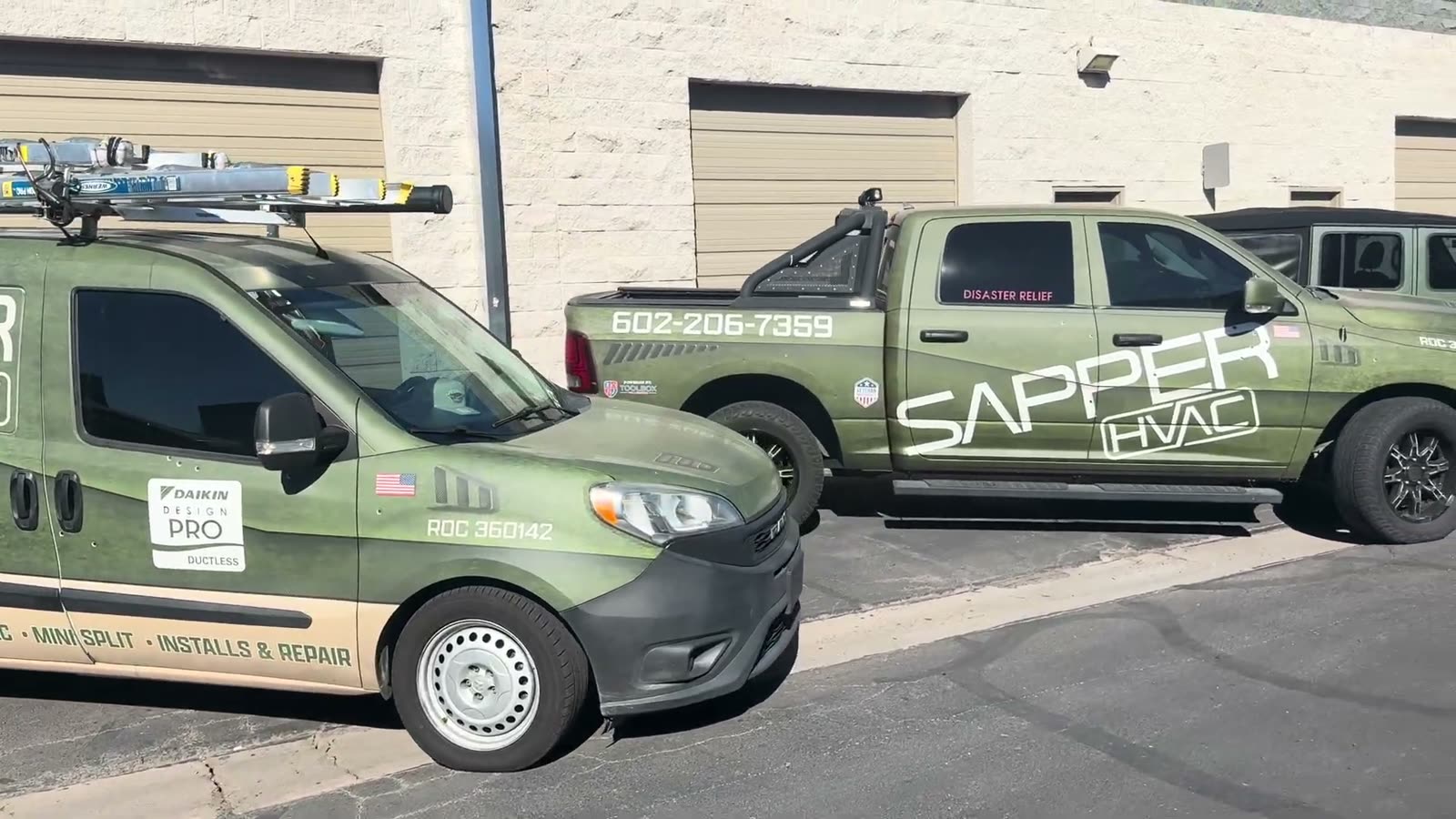
Sapper HVAC is a veteran-owned, licensed (ROC#360142) HVAC installer based in Chandler serving all Phoenix Metro cities. Free quotes — serving the area directly, no pressure.
Serving Chandler · Gilbert · Mesa · Tempe · Scottsdale · Phoenix · Glendale · Peoria and all Metro cities
Veteran-owned · AZ ROC #360142
Need a repair? Sapper HVAC services systems installed by any contractor with a $149 service call. Planning a replacement or new installation? Estimates are free.