
Phoenix summers push air conditioning systems to their limits. When shopping for a new AC unit or mini split, you've probably seen "SEER" ratings plastered across specifications. But what does 18 SEER actually mean, and is it truly enough to keep your Arizona home cool and efficient?
The short answer: 18 SEER is a solid baseline for Arizona homes and meets current federal minimum standards. But the long answer is more nuanced. Your home's insulation, cooling load, climate zone, and electricity rates all factor into whether 18 SEER is optimal or if you should invest in a higher-efficiency system. Let's break down SEER ratings and help you understand what makes sense for your specific situation.
What Is SEER, and Why Does It Matter?
SEER stands for Seasonal Energy Efficiency Ratio. It's a measurement of how much cooling an air conditioning system produces per watt of electricity it consumes, averaged across an entire cooling season.
Think of it like fuel economy for your car. A car that gets 30 miles per gallon is more efficient than one that gets 20 mpg. Similarly, an 18 SEER AC system is significantly more efficient than an older 10 SEER unit—roughly 80% more efficient, in fact.
The U.S. Environmental Protection Agency (EPA) sets minimum SEER standards for air conditioning systems sold in different regions. In the Southwest (including Arizona), the current minimum standard is 14 SEER. This means any new system you buy must meet or exceed 14 SEER efficiency.
An 18 SEER system exceeds the federal minimum by 29%, making it a well-above-average efficiency choice. But "above average" doesn't necessarily mean "optimal" for your home. Context matters.
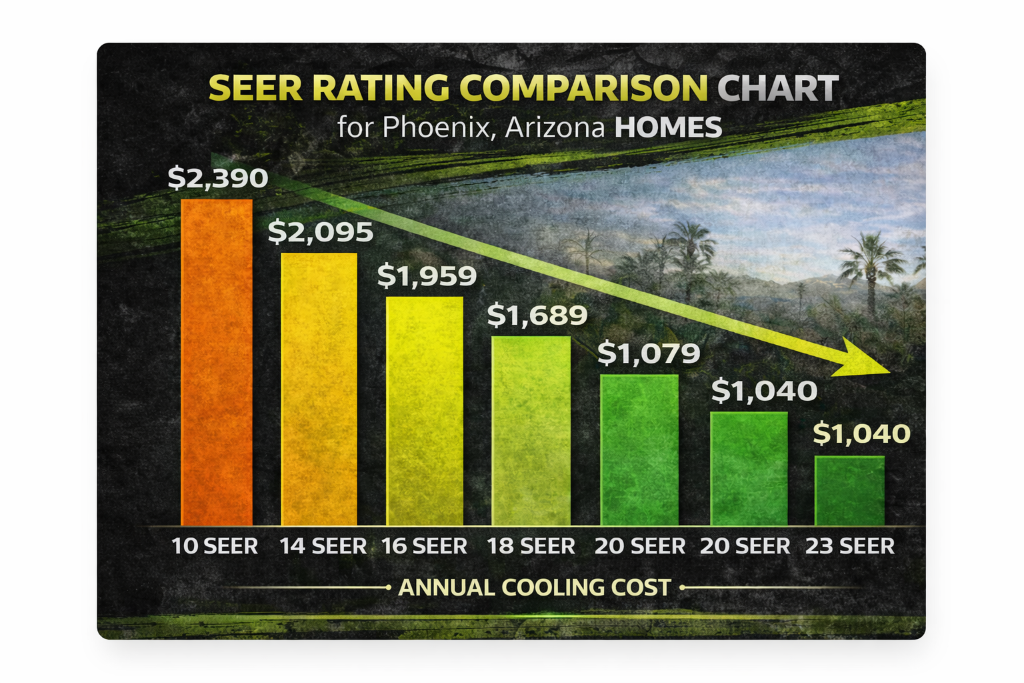
18 SEER vs. Higher Ratings: Cost-Benefit Analysis
Here's where Arizona homeowners often struggle: 18 SEER is good, but is it good enough to justify NOT upgrading to 20 or 23 SEER?
The Efficiency Difference:
A 23 SEER system is approximately 28% more efficient than an 18 SEER system. Over a summer cooling season in Phoenix, that difference compounds. In a home that runs AC 8–10 hours per day for 5 months, the energy savings add up.
The Cost Difference:
A quality 18 SEER mini split or central AC typically costs $3,000–$6,000 installed. A comparable 23 SEER system might cost $5,000–$9,000. That's a $2,000–$3,000 upfront premium for a 28% efficiency boost.
The Payback Period:
With Arizona's high electricity rates (currently 12–14¢ per kWh), a homeowner could recoup the upfront cost difference in 5–8 years through reduced energy bills. After that, the higher-efficiency system continues saving money for its 10–12 year lifespan. For most Phoenix homeowners, the investment makes financial sense—especially if electricity rates continue rising.
Arizona Heat: Why Standard Rules Don't Apply
SEER ratings are calculated using a national average climate model. Arizona is not average. Phoenix summers regularly exceed 110°F, and air conditioning systems work nearly non-stop from May through September.
This extended run-time means Arizona homes accumulate cooling hours faster than homes in moderate climates. A system that might last 10–12 years in a cooler region might experience more stress in Phoenix and require more frequent maintenance or earlier replacement.
Additionally, homes with poor insulation, large west-facing windows, or dark roofs experience even higher cooling loads. For these homes, an 18 SEER system may struggle to maintain comfort during peak heat days, leading to:
- • Higher indoor temperatures (system can't keep up)
- • Compressor strain (running continuously at peak load)
- • Increased energy bills (inefficient operation)
- • Higher wear and tear (reduced equipment lifespan)
A higher SEER rating (20-23 SEER) buffers against these stress factors. The system has more cooling capacity reserve, so it doesn't max out during peak heat. It runs shorter cycles, reducing compressor strain and extending the system's lifespan.
The Role of Load Calculations and Home Efficiency
SEER ratings matter, but they're only part of the equation. The real question is: "Is an 18 SEER system right for MY home?"
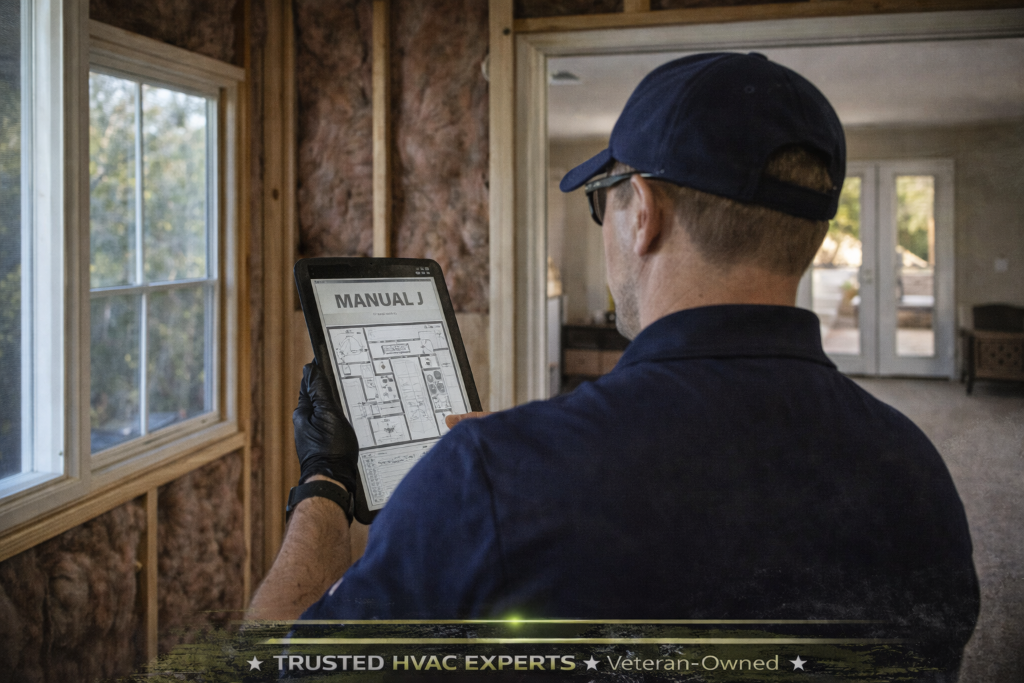
A professional load calculation determines the cooling capacity your home actually needs (measured in BTU). SEER rating and cooling capacity are separate variables:
Cooling Capacity determines whether the system can maintain your target temperature (e.g., 78°F) during peak heat.
SEER Rating determines how efficiently it delivers that cooling.
A well-insulated, efficient home with a modest cooling load might find 18 SEER perfectly adequate. A poorly insulated home with large windows and high solar load might struggle with 18 SEER and benefit from 20-23 SEER.
This is why professional HVAC contractors don't simply recommend a SEER rating based on square footage. They calculate the actual cooling load, recommend appropriate capacity, and then discuss SEER options based on your budget, long-term plans, and energy cost priorities.
When Is 18 SEER Good Enough? When Should You Go Higher?
18 SEER is typically sufficient if:
- • Your home is well-insulated with good air sealing
- • Your cooling load is moderate (not extreme)
- • You're in a lower-heat zone (e.g., Scottsdale vs. Ahwatukee)
- • You plan to stay in the home for 5–7 years
- • Your budget is limited and you prioritize lower upfront costs
- • You're replacing an old system and just want a modern, compliant unit
Upgrade to 20-23 SEER if:
- • Your home has poor insulation or large west-facing windows
- • You have a history of high energy bills during summer
- • You plan to stay in your home 10+ years (longer payback period)
- • Your cooling load is high (confirmed via professional calculation)
- • You prioritize maximum efficiency and want to minimize long-term operating costs
- • You're in a prime solar-gain area (south or west Phoenix)
Frequently Asked Questions
Is 18 SEER enough for Phoenix homes?
For most Arizona homes, 18 SEER is a good minimum standard. However, climate zone, home insulation, and cooling load calculations matter. In high-heat areas with poor insulation, higher SEER ratings (20+) provide better long-term savings. Always consult a professional for your specific home.
What does SEER rating mean?
SEER (Seasonal Energy Efficiency Ratio) measures how efficiently an air conditioning system converts electricity into cooling. Higher SEER ratings mean more cooling output per watt of electricity used. An 18 SEER unit is roughly twice as efficient as older 10 SEER systems.
Does Arizona heat require higher SEER ratings?
Arizona's extreme summer heat means air conditioning runs longer and harder than cooler climates. Higher SEER ratings (20-23 SEER) can reduce electricity costs over time, especially for homes with high cooling loads or poor insulation. 18 SEER is acceptable but not optimal for peak efficiency in intense desert climates.
What is the difference between 18 SEER and 23 SEER?
A 23 SEER unit is approximately 28% more efficient than an 18 SEER unit. For every 100 hours of cooling, a 23 SEER system uses less electricity than an 18 SEER system. Over a 10-year lifespan in Arizona, this efficiency difference can save thousands in energy costs, though upfront costs are higher.
Should I upgrade to higher SEER if I already have 18 SEER?
Upgrade decisions depend on your system's age, current efficiency, electricity rates, and cooling load. If your 18 SEER system is still functioning well, replacement may not be cost-effective immediately. However, if it requires frequent repairs or you have high energy bills, upgrading to 20+ SEER could be worthwhile.
Get Professional Efficiency Guidance
Sapper HVAC provides professional load calculations and honest efficiency recommendations tailored to your Phoenix home. We'll help you understand whether 18 SEER is right for you or if upgrading to higher efficiency makes financial sense.