
Scenario
New room addition in Phoenix with no nearby supply and return ducts
For a new room, garage conversion, casita, or addition in the Phoenix area, the key question is usually whether to extend the existing ductwork or give the new space its own ductless mini split. The right answer depends on the existing HVAC system, available capacity, duct layout, electrical requirements, comfort goals, and installation scope.
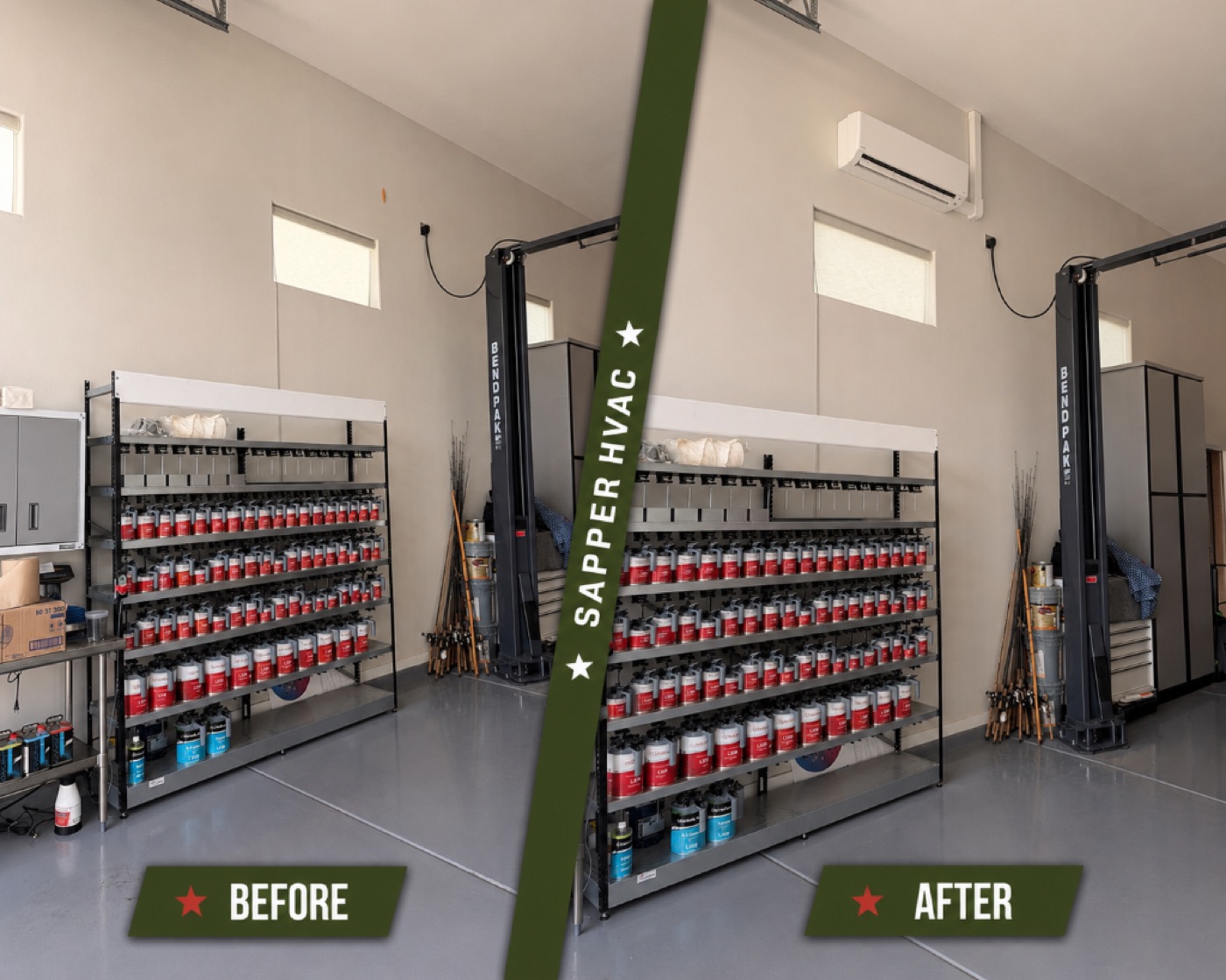
Independent comfort without extending the home's existing ductwork.
Uses the home's central HVAC system and ductwork to serve the new space.
Side-by-Side
| FEATURE | MINI SPLIT (DUCTLESS) | CENTRAL AIR (DUCTED) |
|---|---|---|
| EXISTING DUCTWORK REQUIRED | No | Yes |
| INDEPENDENT TEMPERATURE CONTROL | Yes, dedicated zone | Usually tied to central thermostat unless zoning is added |
| HOME ADDITION WITHOUT NEARBY DUCTS | Often simpler | May require new duct runs and system-capacity review |
| USES EXISTING CENTRAL SYSTEM | No | Yes |
| WHOLE-HOME APPEARANCE | Visible indoor unit | Uses supply and return grilles |
| SEPARATE COMFORT FOR NEW SPACE | Built in | Depends on duct design and controls |
| ELECTRICAL REQUIREMENTS | Dedicated circuit based on equipment | Depends on central system and project scope |
| BEST FIT FOR DETACHED SPACE | Often a strong fit | Usually impractical without separate equipment |
| BEST FIT IF CENTRAL SYSTEM HAS CAPACITY | Still possible | Can make sense if ducts can be extended correctly |
| PROJECT COST | Depends on equipment and installation scope | Depends on ductwork, system capacity, controls, and installation scope |
● Green dot = advantage in that category for Arizona conditions.
Pros & Cons
Mini Split (Ductless)
Pros
Cons
Central Air (Ducted)
Pros
Cons
Arizona Expert Verdict
A ductless mini split is often a strong option when the new space does not have practical duct access, needs independent temperature control, or would force major changes to the existing central system. Extending central air can make sense when the current HVAC system has enough capacity, the ductwork can be extended correctly, and keeping the addition on one central system is the priority. The decision should be based on the actual load and installation conditions rather than a one-size-fits-all rule.
Sapper HVAC Recommends
Mini split when the addition needs its own zone or duct extension is impractical; central air when the existing system and ducts can support the added space correctly.
The best choice depends on central-system capacity, duct layout, insulation, windows, exposure, electrical requirements, room use, and whether the homeowner wants independent control.
Real-World Arizona Scenarios
New room addition in Phoenix with no nearby supply and return ducts
A dedicated ductless system can serve the addition without forcing a major duct extension through the existing home.
Addition next to accessible ductwork with a central system that has available capacity
Extending the existing system may be practical if the load, duct design, return-air path, and airflow all work.
Scenario
Garage conversion or detached workshop
Independent equipment avoids extending the home's central duct system into a space that may have very different cooling needs.
Casita or guest suite that needs its own thermostat
A separate zone gives the occupant independent temperature control without running the main home's system for one space.
Whole-home AC replacement with existing ductwork in good condition
If the goal is to replace the entire home's HVAC system, the existing duct network can make a central replacement the more natural path.
One hot bedroom while the rest of the house is comfortable
The cause may be airflow, ductwork, insulation, solar exposure, or room load. A mini split can be an option, but the underlying issue should be understood first.
Common Questions
A ductless mini split is often a strong choice when the addition has no practical duct access, needs independent temperature control, or the existing central system does not have enough capacity for the added load. Extending central air can make sense when the current HVAC system has available capacity and the ductwork can be extended with proper supply, return, and airflow design. Sapper HVAC evaluates both options before recommending a system.
Start by checking whether the existing central system can handle the added cooling load and whether a proper supply and return path can reach the new space. If either is difficult, a separate mini split can be the cleaner option. If the system has capacity and duct access is practical, extending the central system may make sense.
Yes. Mini splits are commonly used for garages, casitas, offices, workshops, additions, and converted spaces because they provide dedicated heating and cooling without extending the home's existing ductwork.
Possibly. The existing system must have enough capacity for the added load, and the ductwork must be able to deliver and return the required airflow. Sapper HVAC reviews the existing equipment, duct layout, room load, electrical requirements, and access before recommending an extension.
There is no reliable one-price answer. Mini split cost depends on capacity, equipment, electrical distance, line-set routing, condensate handling, mounting, and access. Extending central air depends on ductwork, return-air design, controls, available system capacity, and whether the existing HVAC equipment must also be changed. A project-specific estimate is the best comparison.
Yes, properly designed multi-zone or multiple single-zone systems can cool a home, but that does not automatically make them the best replacement for a house that already has usable central ductwork. Whole-home design should compare room loads, zoning goals, equipment layout, electrical requirements, appearance, and total installed scope.
Veteran-Owned · Licensed ROC#360142 · Phoenix Metro
Sapper HVAC provides free installation estimates for Phoenix-area additions, garages, casitas, and whole-home HVAC replacements. We compare the existing system, ductwork, room load, electrical requirements, and installation scope before recommending an option.
Related Resources
Mini Split Installation Phoenix
Ductless mini split installation for additions, garages, bedrooms, offices, and other Phoenix-area spaces.
Learn More →
Mini Split Installation
Compare single-zone and multi-zone mini split installation options.
Learn More →
Central Heat & AC
Central split-system AC and heat-pump replacement options.
Learn More →
Garage Mini Split Installation
Dedicated ductless cooling for Arizona garages and workshops.
Learn More →
Mini Split Sizing Guide
Learn what affects mini split capacity in Arizona spaces.
Learn More →
HVAC Financing
Financing options for qualified customers on eligible HVAC installations.
Learn More →
Veteran-owned · AZ ROC #360142
Need a repair? Sapper HVAC services systems installed by any contractor with a $149 service call. Planning a replacement or new installation? Estimates are free.