
AC units cool only. Heat pumps cool and heat. See how each performs in Phoenix and which system may fit your home best.
Quick answer: An air conditioner cools your home only. A heat pump cools your home the same basic way in summer, but it can also reverse the refrigerant cycle to heat the home in winter. In Phoenix, where summers are extreme and winters are generally mild, that ability to provide both cooling and heating from one electric system is why heat pumps are a strong option for many homeowners.
What Is the Difference Between an AC Unit and a Heat Pump?
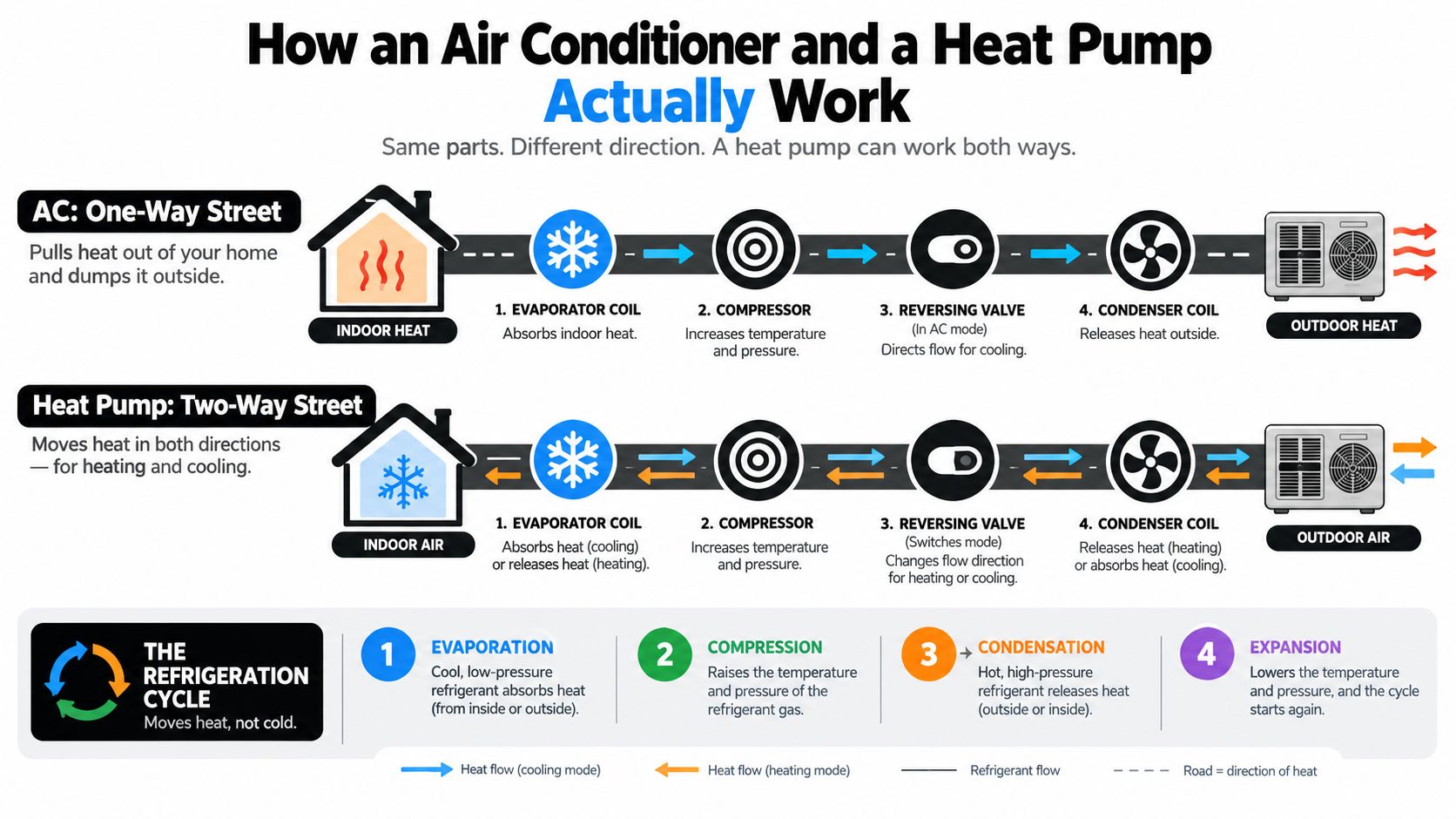
The biggest difference is what happens when you need heat. A standard central air conditioner removes heat from inside your home and moves it outdoors. When winter arrives, the home needs a separate heat source, commonly a gas furnace or electric air handler with heat strips.
A heat pump also moves heat out of the home during cooling season, so in summer it operates much like an air conditioner. In heating mode, a reversing valve changes the refrigerant flow so the system can move available outdoor heat into the home.
AC Unit vs Heat Pump at a Glance
| Feature | AC Unit | Heat Pump |
|---|---|---|
| Cooling | Yes | Yes |
| Heating | Needs a separate heat source | Yes, from the same system |
| Primary energy source | Electric cooling plus separate furnace or heat source | Electric |
| Best fit | Homes keeping an existing gas-furnace setup | Homes wanting all-electric heating and cooling |
Do AC Units and Heat Pumps Cool Differently in Phoenix?
During cooling mode, an air conditioner and a comparable heat pump use the same basic refrigeration process: the indoor coil absorbs heat and the outdoor condenser releases it. The important Phoenix question is not simply whether the equipment says “AC” or “heat pump.” It is whether the exact model is sized correctly, has the right efficiency and capacity for the home, and is installed and commissioned properly for long desert run times.
In Phoenix, equipment selection should account for the home’s actual cooling load, insulation, window exposure, duct condition, airflow, electrical requirements, and the exact outdoor operating data published for the model being quoted.
Why Heat Pumps Make Sense in Phoenix
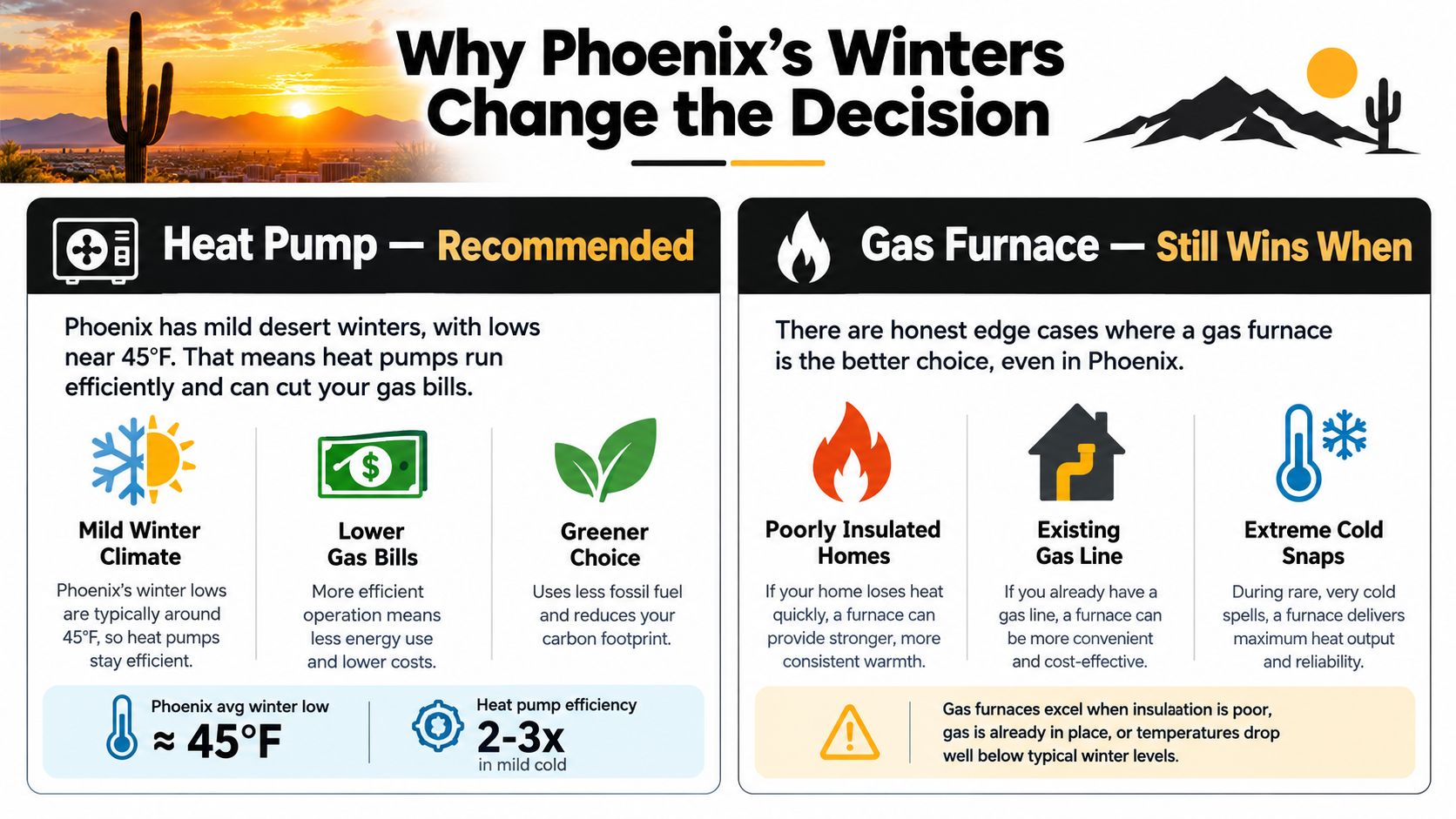
Phoenix has a cooling-dominated climate with relatively mild winters. That means a heat pump spends most of the year doing what an AC does: cooling the home. When temperatures drop, the same system can provide electric heating without relying on a gas furnace.
- One system provides both heating and cooling.
- No natural-gas furnace is required for an all-electric setup.
- Modern inverter heat pumps can modulate output for steadier comfort.
- Heat pumps are well matched to climates where winter heating demand is moderate.
When a Traditional AC Unit May Still Be the Better Choice
A standard AC system can still be a good choice when the home already has a newer gas furnace you want to keep, when replacing only the cooling side makes financial sense, or when a matched AC-and-furnace combination fits the existing ductwork and utility setup better.
The right decision should be based on the full system, not on the outdoor condenser alone.
What About Gas Heat vs a Heat Pump?
A traditional split AC system is often paired with a gas furnace. That gives you electric cooling and gas heating. A heat pump can replace both functions with an electric refrigerant system, although some homes use dual-fuel equipment that combines a heat pump with gas backup.
For Phoenix homeowners considering a full replacement, this is often the more useful comparison: keep gas heat, convert to an all-electric heat pump, or choose dual fuel.
Which Is More Efficient in Phoenix?
Cooling efficiency depends on the exact equipment ratings and system design. A high-efficiency AC can outperform a lower-efficiency heat pump in cooling mode, and a high-efficiency heat pump can outperform a basic AC. Compare the actual SEER2 rating, capacity data, controls, and installation quality rather than assuming one equipment type is automatically more efficient.
For heating, a heat pump moves heat instead of creating it with electric resistance, which can make it an efficient way to heat during Phoenix’s mild winter weather.
Does a Heat Pump Cost More Than an AC Unit?
The equipment price can differ, but the real installed cost depends on what is being replaced. If you are comparing an AC plus a separate furnace against a heat-pump system that provides both heating and cooling, compare the complete installed systems, rebates, electrical scope, duct changes, thermostat requirements, and warranty terms.
Sapper HVAC provides written replacement estimates so homeowners can compare the actual installed options rather than just the price of one outdoor unit.
AC Unit or Heat Pump: Which Is Better for a Phoenix Home?
For many Phoenix homes replacing the entire HVAC system, a heat pump is worth serious consideration because the climate is cooling-heavy and winter heating demand is relatively mild. If your home has a newer gas furnace you want to keep, a matched AC replacement may be the more practical choice.
The best answer depends on your existing equipment, fuel source, electrical capacity, home load, budget, comfort goals, and how long you expect to stay in the home.
Questions to Ask Before You Choose
- Are we replacing only the condenser, or the entire HVAC system?
- Do I want to keep natural gas or convert to all electric?
- What are the exact SEER2 and heating ratings of the quoted models?
- Does the home need duct or return-air changes?
- What electrical changes are required?
- Are rebates or financing available for the selected equipment?
- What labor and manufacturer warranty terms apply?
Frequently Asked Questions
Is a heat pump the same thing as an AC unit?
Not exactly. Both can cool a home using a refrigeration cycle, but a heat pump can reverse that cycle and provide heating as well.
Does a heat pump cool as well as an AC in Phoenix?
A properly selected heat pump can provide strong cooling in Phoenix. Performance depends on the exact model, sizing, published operating data, airflow, ductwork, and installation.
Do I still need a furnace with a heat pump?
Not necessarily. Many Phoenix homes can use an all-electric heat pump system. Other homes use dual-fuel systems with gas backup.
Can I replace my gas furnace and AC with a heat pump?
Yes, many homes can convert from a gas furnace and AC to an all-electric heat pump, but electrical capacity, ductwork, equipment sizing, and installation requirements should be reviewed first.
Which system should I buy?
Choose based on the complete home and the exact equipment being quoted. Sapper HVAC can compare AC, heat-pump, and dual-fuel options for your Phoenix Metro home.
Need Help Comparing AC and Heat Pump Options?
Sapper HVAC is a veteran-owned, licensed, bonded, and insured HVAC contractor serving the Phoenix Metro. We install split systems, inverter heat pumps, package units, mini splits, and complete HVAC replacements.
Call: (602) 206-7359
Email: [email protected]
Arizona ROC: #360142
Schedule a free replacement estimate or review our Phoenix heat pump installation options.